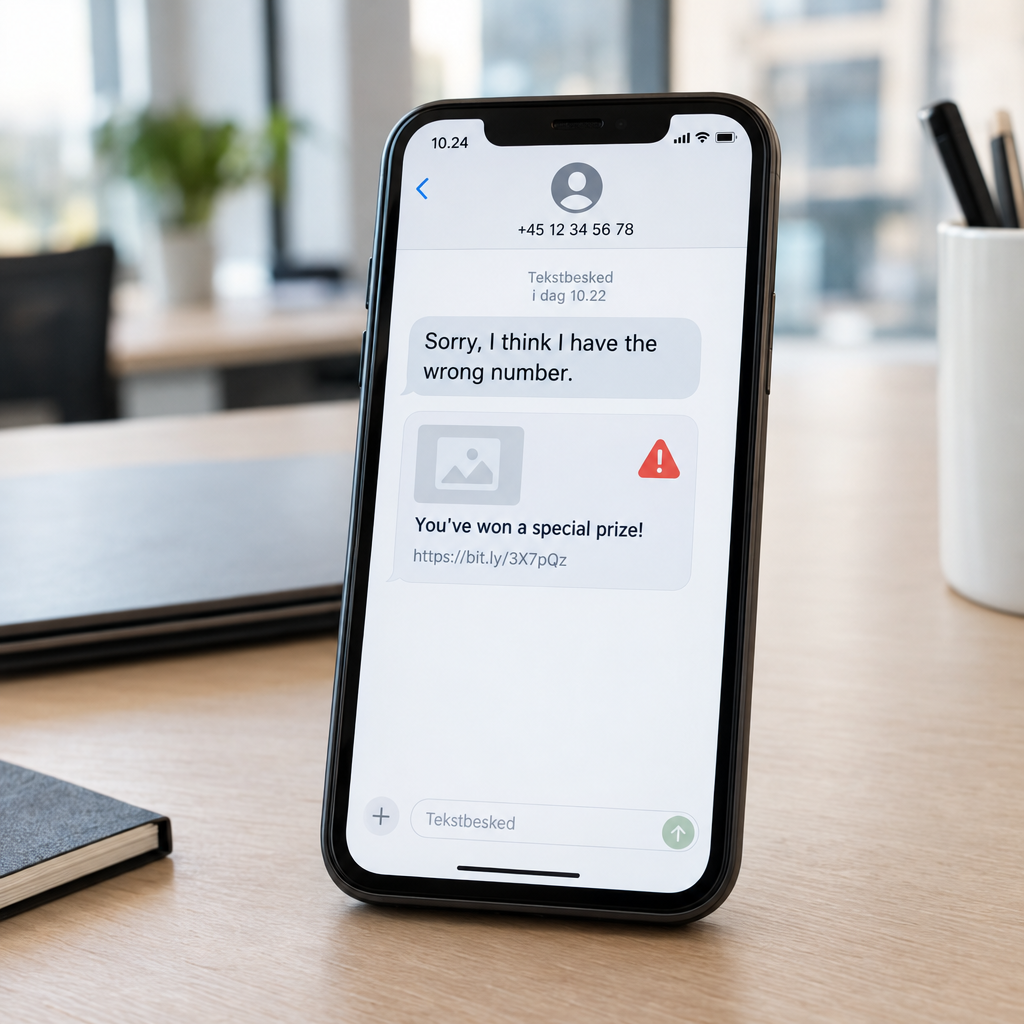
A “wrong number” text can look harmless: someone says they meant to contact a friend, apologises, and starts a friendly conversation. But unexpected messages like this can also be the opening move in a scam designed to build trust before asking for money, personal information, or a click on a suspicious link.
For business owners and individuals in Denmark and across Europe, knowing the warning signs is a practical part of protecting finances and data. At Best Choice, we help businesses reduce digital risks with carefully designed automation and IT solutions. Here’s how wrong number text scams work—and what you can do to stay safer.
1. What is a wrong number text scam?
A wrong number text scam starts with a message that appears to have been sent to you by mistake. The sender may apologise and continue chatting, sometimes asking simple questions to make the exchange feel natural. A genuine mistake is possible, but a stranger who quickly tries to build a relationship deserves caution.
The aim is often to keep you engaged. After gaining your trust, the sender might introduce an investment opportunity, request money, ask for personal details, or send a link to a fake website. This gradual approach is sometimes associated with romance or investment fraud, including scams that encourage victims to invest increasing amounts of money.
2. How scammers build trust
Scammers may use a friendly tone, a convincing profile photo, or a story about work, travel, or family. They can message over days or weeks, making the conversation feel personal before introducing a financial request. Some use information from public social media profiles to make their messages seem more relevant.
Be especially wary if the person avoids a simple, verifiable explanation of how they got your number, steers the conversation to another messaging app, or asks you to keep the relationship or opportunity secret. A request for cryptocurrency, gift cards, urgent transfers, or “guaranteed” investment returns is a major warning sign.
3. Spot the warning signs before you reply
- An unexpected opening message: The sender claims to have contacted you by mistake but keeps pushing the conversation forward.
- Pressure or secrecy: They want you to act quickly or avoid discussing the matter with family, colleagues, or your bank.
- Links and requests for codes: They ask you to visit a website, share a verification code, or provide banking or identity details.
- Too-good-to-be-true offers: They promise easy profits, unusually high returns, or a low-risk way to make money.
Do not rely on a familiar-looking name, logo, or phone number as proof that a message is genuine. Sender details can be misleading, and scammers may imitate real organisations. Contact a company through contact information you find independently, rather than using a number or link in the unexpected message.
4. What to do if you receive one
You do not need to continue the conversation. Avoid clicking links, downloading files, sharing personal information, or sending money. Block the sender and use your phone’s spam-reporting option; in Denmark, you can also check with your mobile provider about forwarding unwanted SMS messages to 7726.
If you have already shared banking details or sent money, contact your bank immediately using its official number or app. Change any exposed passwords, enable multi-factor authentication where possible, and save screenshots and message details. If you shared a MitID code or suspect your MitID has been misused, follow official MitID guidance and contact the relevant support service promptly.
5. Protect your business and customers
Wrong number scams can affect businesses as well as individuals. An employee might receive a message pretending to be a customer, supplier, or manager, while customers may be targeted by someone impersonating your company. Clear procedures help staff verify unusual payment requests and report suspicious messages without embarrassment.
At Best Choice, we can build tailored workflows that flag unusual messages, route reports to the right team, and connect security alerts with your existing business systems. For example, a clinic could give reception staff a simple process for checking unexpected requests, while an online store could notify customers through its verified channels about current impersonation scams. Automation supports good security practices; it should not replace human review of sensitive decisions.
6. Make scam prevention part of everyday operations
Start with a few practical rules: never share one-time codes, verify payment changes through a separate trusted channel, and treat unexpected links with care. Train staff to pause when a message creates urgency, and make it easy for them to report suspicious contact. Keep business devices, software, and account access up to date.
For a growing company, a custom security workflow can reduce repetitive checking and help ensure reports are handled consistently. We can assess how your team communicates, identify weak points, and design an appropriate solution that fits your tools and processes. The best approach is practical: protect people without making legitimate work unnecessarily difficult.
Protect your business from digital scams
A wrong number text may be a genuine mistake, but an unexpected conversation that turns into a request for money, sensitive information, or investment is a serious warning sign. Take your time, verify claims independently, and never let pressure push you into sharing details or making a payment.
If you want to strengthen your business processes with tailored IT, automation, and security workflows, contact Best Choice. We’ll help you find a practical solution that protects your team and supports the way your business works.