Understanding the Difference between TPU and GPU: Why It Matters for Your Business
In the rapidly evolving world of technology, businesses consistently seek ways to enhance their operations. One of the most exciting developments in recent years has been the emergence of specialized processors, particularly Tensor Processing Units (TPUs) and Graphics Processing Units (GPUs). While both technologies are essential in the realm of data processing and artificial intelligence (AI), they serve different purposes and can significantly impact how companies implement their digital strategies.
For instance, take Google’s Pixel 11 phone, which is powered by a Tensor G6 processor featuring a robust TPU. This raises an important question: How do TPUs differ from GPUs, and what implications do these differences have for businesses looking to leverage cutting-edge technology in their operations? In this article, I’ll dive deep into the distinctions between TPUs and GPUs, showcasing how understanding these processors can lead to smarter decisions for your IT infrastructure.
What Are TPUs and GPUs?
To understand the differences between TPUs and GPUs, we first need to clarify what each of these processors does.
TPUs: Designed for Machine Learning
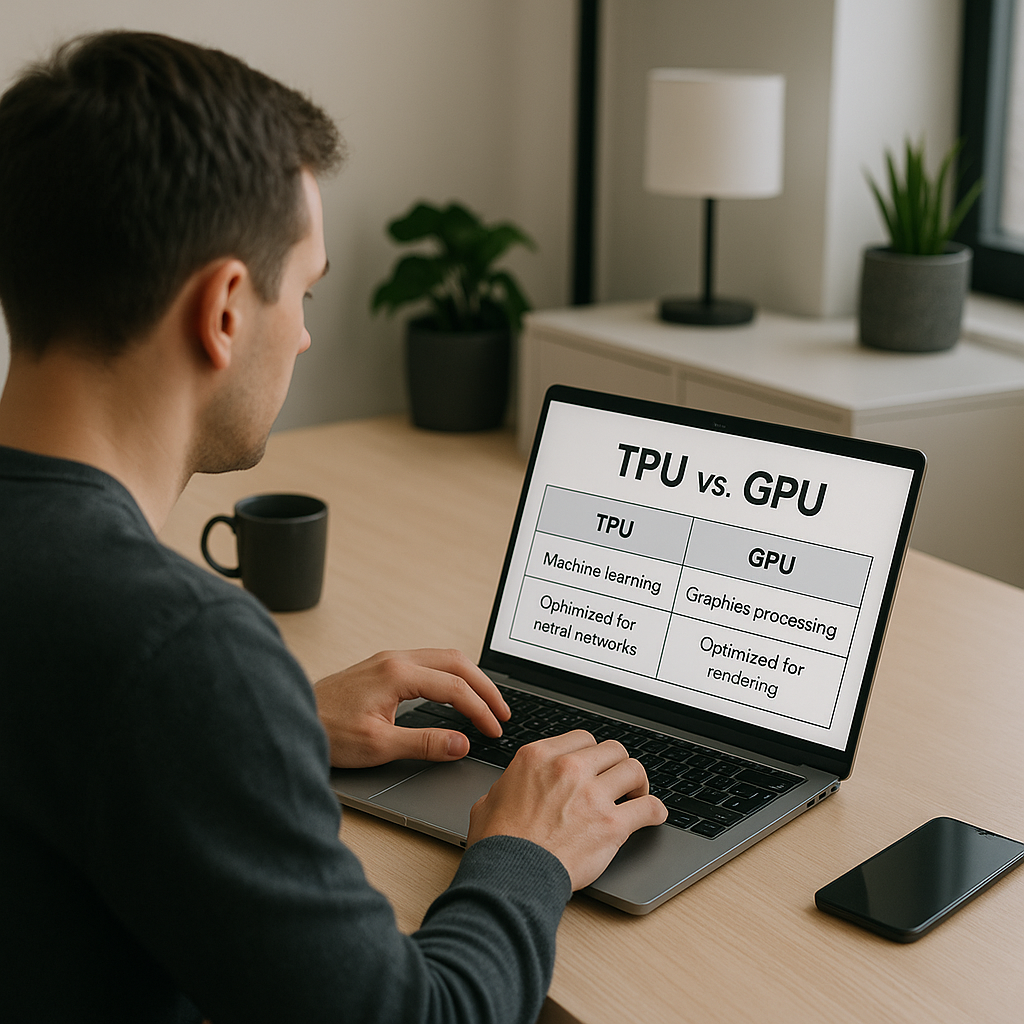
TPUs are specialized hardware designed specifically for machine learning tasks. Their architecture is tailored to perform the computations required for neural network models efficiently. Essentially, TPUs speed up tasks like training and inference, making them indispensable for businesses looking to harness AI capabilities.
GPUs: Versatile Workhorses
GPUs, on the other hand, were originally created for rendering graphics in video games and other visual applications. Over time, they have been adapted for various computations beyond graphics rendering, including machine learning tasks. While they are versatile and powerful, their architecture is not as streamlined for AI workloads as TPUs.
Performance: Different Use Cases
Understanding the performance differences between TPUs and GPUs can help you make informed decisions about your technology needs.
Speed and Efficiency
TPUs are generally faster and more efficient at processing large datasets typical in machine learning algorithms. For instance, when an e-commerce platform needs to analyze customer behavior patterns or automate recommendations, a TPU can cut down processing time significantly compared to a GPU.
Scalability for Businesses
If your business is growing and you anticipate needing to scale up your AI applications, TPUs offer greater scalability. Their architecture allows them to handle larger volumes of data more efficiently than GPUs, making them a suitable choice for companies planning to implement extensive machine learning applications.
Real-World Applications: Examples of TPUs vs. GPUs
Let’s look at how TPUs and GPUs might play out in practical business scenarios.
Case Study 1: AI-Powered Retail
Imagine a retail company utilizing AI to analyze purchasing patterns. By leveraging TPUs to perform complex calculations quickly, the company can optimize its inventory management, ensuring they have the right products available at the right times without overstocking.
Case Study 2: Online Customer Support
An online customer support system that uses chatbots can benefit significantly from TPUs. The speed of a TPU allows the system to generate responses in real time, enhancing customer satisfaction and resolving issues without hiccups. This efficiency may lead to higher sales and customer retention rates.
Cost Considerations: Budgeting for Your Tech Needs
When it comes to implementing new technology, cost is always a factor. TPUs may have higher initial costs compared to GPUs, given their specialized nature and performance benefits. However, understanding the long-term savings and potential ROI from increased efficiency and improved customer experience can justify the investment.
Integrating Solutions: What We Can Do for You
At Best Choice, we understand that navigating the choice between TPUs and GPUs can be daunting. That’s where we come in. Whether you aim to harness the power of a TPU for advanced machine learning capabilities or integrate GPUs for versatile computing, we can provide the expertise to optimize your business’s technology infrastructure.
Conclusion: Making Informed Choices for Your Business
In conclusion, understanding the differences between TPUs and GPUs is crucial for business decision-makers like you. The choice between these processors can have substantial implications for your operations, from workflow efficiency to cost-effectiveness. If you’re ready to enhance your business with the right technology solutions tailored to your needs, Best Choice is here to help. Contact us today, and let’s explore the best paths forward for your IT strategy.