5 Safety Practices to Know Before Vibe Coding
Vibe coding means using AI tools to create or change software by describing what you want in everyday language. It can help you build a prototype quickly, automate a repetitive task, or test a new business idea without writing every line of code yourself.
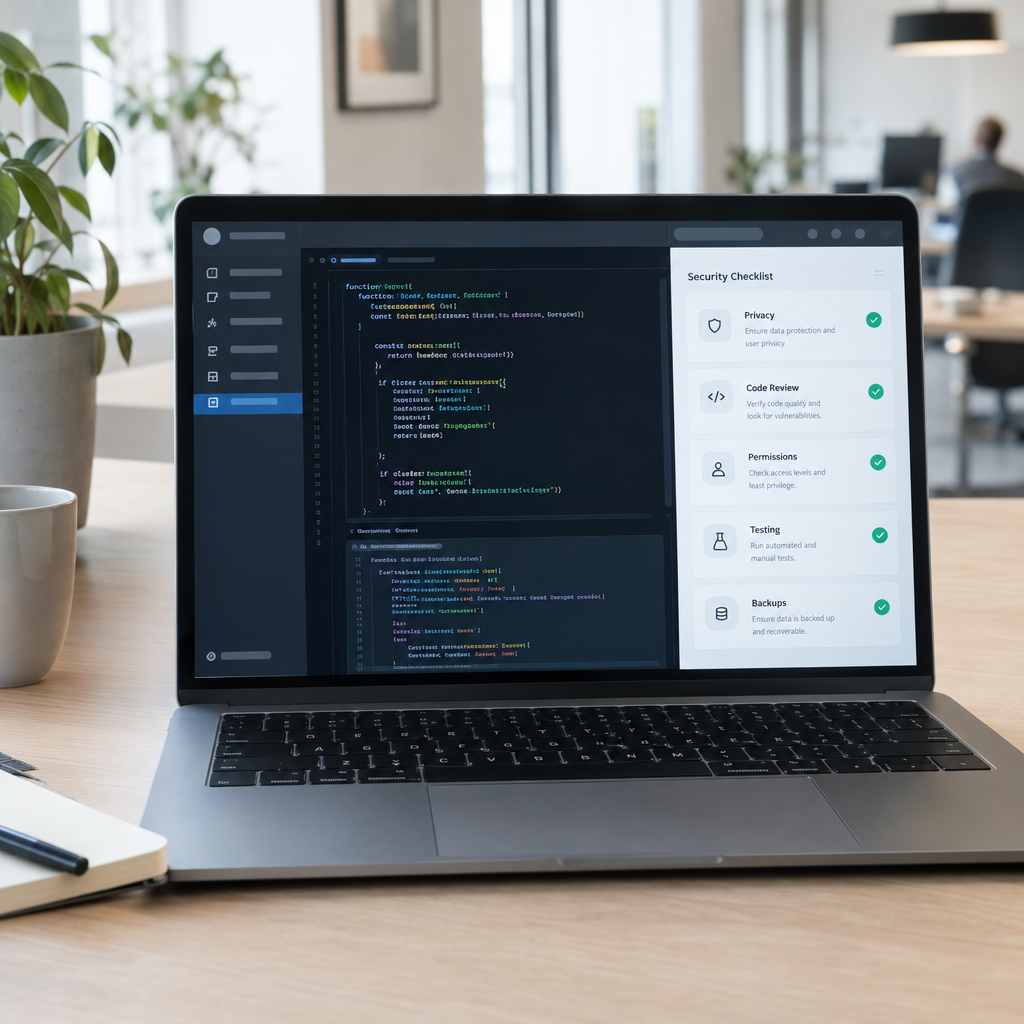
But AI-generated code can contain security gaps, expose sensitive information, or behave differently from what you expected. At Best Choice, we see vibe coding as a useful starting point—not a substitute for careful testing and sound technical decisions. These five practices can help you experiment safely and decide when a business-critical project needs professional support.
1. Keep passwords and business data out of prompts
Never paste passwords, API keys, customer records, payment details, or confidential business information into an AI prompt unless you have checked how that service handles and stores your data. A prompt may be processed outside your company’s systems, so treat it as information you are sharing with an external service.
Use fictional examples when asking for help. Replace real names, email addresses, and order details with sample data, and store secrets in protected configuration rather than directly in your code. If personal data is involved, consider your GDPR responsibilities and check that your tools and processes are appropriate before you begin.
2. Review the code instead of trusting it blindly
AI can produce code that looks convincing but has hidden weaknesses. It may skip access checks, expose information in error messages, or allow users to change data they should not control. Ask the AI to explain what the code does, then review the important parts yourself or have an experienced developer check them.
Pay particular attention to login and permissions, forms, file uploads, payment flows, and database queries. For example, a booking website for a clinic must prevent one patient from seeing another patient’s appointment details. If you cannot explain how a feature protects user data, do not put it into production yet.
3. Experiment in a separate, safe environment
Build and test in a development environment that is separate from your live website, webshop, or business database. Use sample data and limited permissions. This way, a faulty experiment is less likely to interrupt orders, bookings, or daily work.
Before making changes, create a backup and confirm you know how to restore it. For a small online shop, test new checkout changes using test orders before customers rely on them. At Best Choice, we can help businesses set up safe development and deployment processes, including controlled access and reliable backups.
4. Check dependencies and validate all input
AI-generated projects may rely on external libraries or packages. Each dependency adds code that your business may need to maintain, so check that it is reputable, necessary, and kept up to date. Open-source security tools such as OWASP guidance and code-scanning options can help teams spot common problems; they are useful checks, not a guarantee of safety.
Also validate information entered by users. A warehouse tool should not accept an impossible stock quantity, and a contact form should not treat submitted text as trusted code. Clear validation rules reduce errors, protect systems, and make workflows more dependable.
5. Test, monitor, and plan for ongoing maintenance
A successful demo is not proof that software is ready for real customers. Test normal use as well as mistakes and unusual cases: incorrect passwords, missing form fields, duplicate bookings, or a failed payment connection. Add automated tests where possible, and monitor the system after launch so that errors do not go unnoticed.
Keep a record of what the software does, who can access it, and how it connects to other systems. AI-assisted code may need updates as libraries, business needs, and security risks change. For a café, a booking process that works today should still be checked when opening hours, staff, or connected systems change.
Make vibe coding useful without taking unnecessary risks
Vibe coding can be a practical way to explore an idea or automate a small task, but the right level of review depends on what the software handles. A prototype for internal use has different risks from a customer-facing system that processes payments, personal data, or business-critical information.
We at Best Choice help businesses turn promising ideas into secure, maintainable digital workflows. We can review AI-generated code, connect custom-built solutions to your existing systems, and help you plan testing, access control, and ongoing support. Contact us to discuss how to use AI and automation safely in your business.