United Is Restricting AI Agents from Booking Flights: What Businesses Should Know
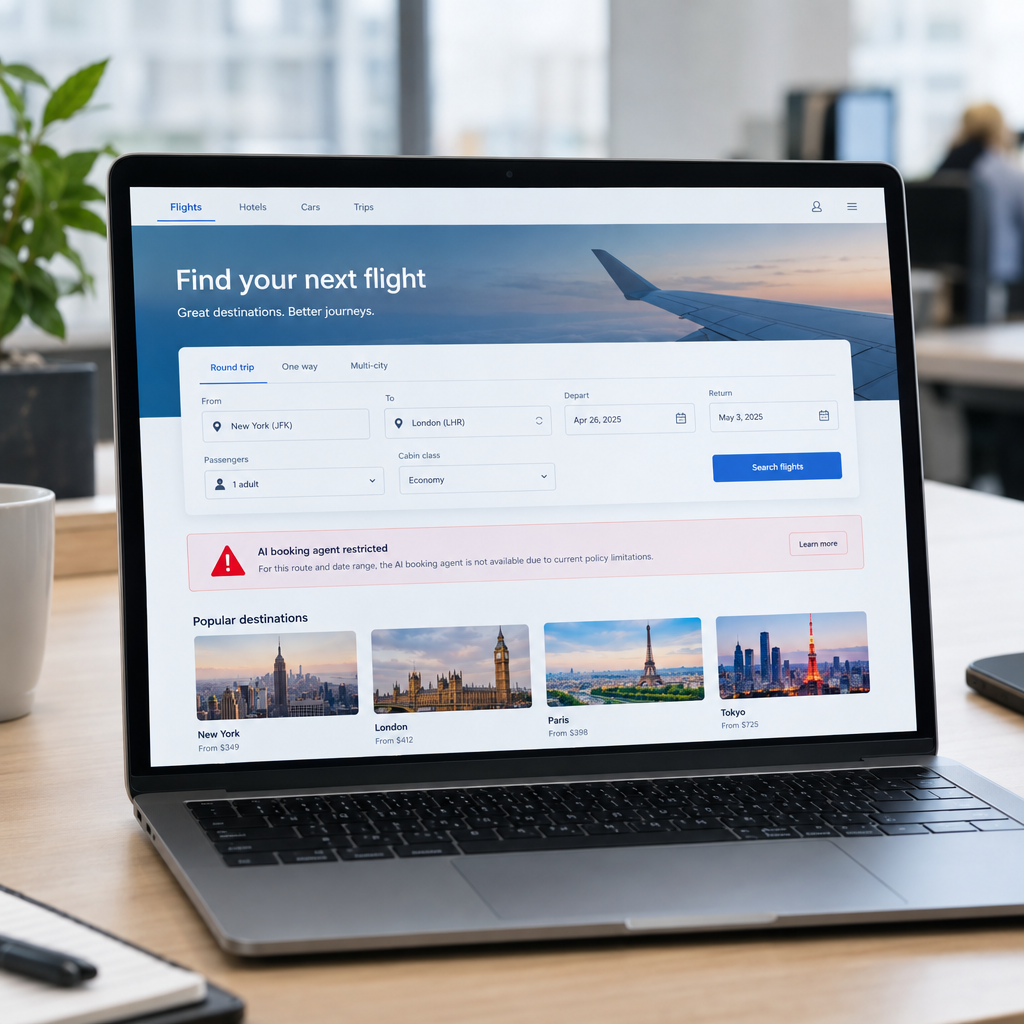
Reports that United is restricting AI agents from booking flights highlight a growing challenge for businesses: AI can make booking faster, but it must also work within airline rules, security controls and consumer-protection requirements. When an automated agent tries to search, select and purchase a ticket on someone’s behalf, a simple task can involve personal data, payment details and important travel decisions.
For companies in Denmark and across Europe, the lesson is not that AI booking should be avoided. It is that automation needs clear limits and reliable connections to the systems it uses. At Best Choice, we build business automation around those practical requirements, helping organisations save time without handing sensitive decisions to an uncontrolled process.
1. Why airlines may limit AI booking agents
An AI agent can do more than answer questions. It may browse options, fill in passenger details and attempt to complete a purchase. Airlines may be concerned about whether an agent is authorised to act for a traveller, how it handles payment and personal information, and whether its automated activity follows the airline’s booking rules.
There can also be regulatory questions. The news headline refers to possible concerns about US Department of Transportation (DOT) and Federal Aviation Administration (FAA) rules, but the exact obligations depend on the activity and context. Businesses should not assume that an AI system is permitted to complete every step simply because it can technically do so.
2. AI can assist without making every decision
A safer approach is to divide the booking process into stages. AI can collect preferences, compare available options and prepare a recommendation, while a person confirms important choices before a booking is made. This keeps routine research quick without leaving final decisions to a tool that may misunderstand a request.
For example, an employee travelling from Copenhagen to a customer meeting could ask an internal assistant to find flights within a budget and suggest options that fit the company travel policy. The employee then reviews the itinerary and confirms the purchase through an approved channel. This human-in-the-loop workflow can reduce administration while preserving accountability.
3. Custom automation should follow clear business rules
At Best Choice, we design custom workflows to fit how a business actually operates. An automation can check an employee’s budget, preferred airports, baggage needs and approval limits, then send suitable choices to the right person. If a request falls outside company policy, the workflow can flag it for review instead of trying to force through a booking.
The same idea applies beyond travel. A clinic might use an assistant to gather appointment preferences but require staff confirmation for unusual cases. An online store could automate order updates while escalating payment or delivery exceptions. Good automation handles predictable work and makes uncertain cases visible.
4. Security and data protection belong in the design
Booking workflows may process names, contact details, travel plans and payment information. Businesses operating in Denmark and the EU should consider data minimisation, access controls, retention periods and applicable GDPR obligations when choosing what an AI tool can see and store. Payment details should be handled through appropriate payment systems rather than copied into ordinary chat histories.
We recommend giving each automated process only the access it needs, keeping a record of important actions and setting clear rules for when a human must approve the next step. These controls help reduce the risk of accidental bookings, unauthorised changes and unnecessary exposure of personal data.
5. Use approved integrations instead of fragile workarounds
Automating a website by imitating clicks can break when the page changes, and it may conflict with a provider’s terms or security measures. Where an airline, booking provider or corporate travel platform offers an approved integration, that is generally a more dependable starting point. The right method depends on the provider’s capabilities and the organisation’s requirements.
We can help businesses assess their existing systems, connect suitable services and build checks around the workflow. Open-source automation tools such as n8n can also be useful for connecting systems, but they still need careful configuration, access management and ongoing maintenance. The tool is only one part of a reliable solution.
6. Practical steps for businesses considering AI travel tools
- Map the process: Identify which steps are research, approval, booking and post-booking support.
- Check permissions: Confirm what the airline or booking service allows before automating interactions.
- Set approval points: Require human confirmation for purchases, changes and policy exceptions.
- Protect information: Limit access to personal and payment data, and define how long records are kept.
- Test exceptions: Check how the workflow responds to schedule changes, unavailable fares and incomplete details.
Start with a small pilot, such as helping staff compare options without completing purchases. Measure time saved, booking errors and user feedback before expanding the automation. This gives decision-makers evidence about where AI helps and where human judgement remains essential.
AI agents can make business processes faster, but they must operate within clear permissions and dependable systems. If you want to explore secure booking automation or connect AI to your existing business workflows, contact Best Choice. We can help you design a practical solution that saves time while keeping people, data and decisions properly protected.