New York’s T-Mobile Broadband Decision Highlights Why Clear Internet Plans Matter
New York is requiring T-Mobile to stop applying data limits or speed throttling to certain low-income home internet plans offered under the state’s Affordable Broadband Act, according to the report. The case puts a spotlight on an issue that matters to households and businesses alike: people need to know what they are paying for, and whether their connection will slow down when they use it.
For business owners, reliable internet is more than a convenience. It supports online sales, bookings, payments, customer service, cloud software and communication between teams. At Best Choice, we help businesses make their digital operations more dependable, including by connecting systems and automating the work involved in monitoring service, costs and performance.
1. What the New York case is about
The report says T-Mobile was throttling speeds on plans offered under New York’s Affordable Broadband Act, and the state is now requiring the company to stop. The issue is not simply whether a plan has a monthly price; it is whether its terms and actual performance match what customers are entitled to expect.
The details of this case are specific to the plans and rules involved. For customers, the practical lesson is to read the plan terms carefully and ask the provider what happens after a usage threshold is reached. For providers, it is a reminder that clear, accurate communication about speed and data conditions is essential.
2. Data caps and throttling are not the same thing
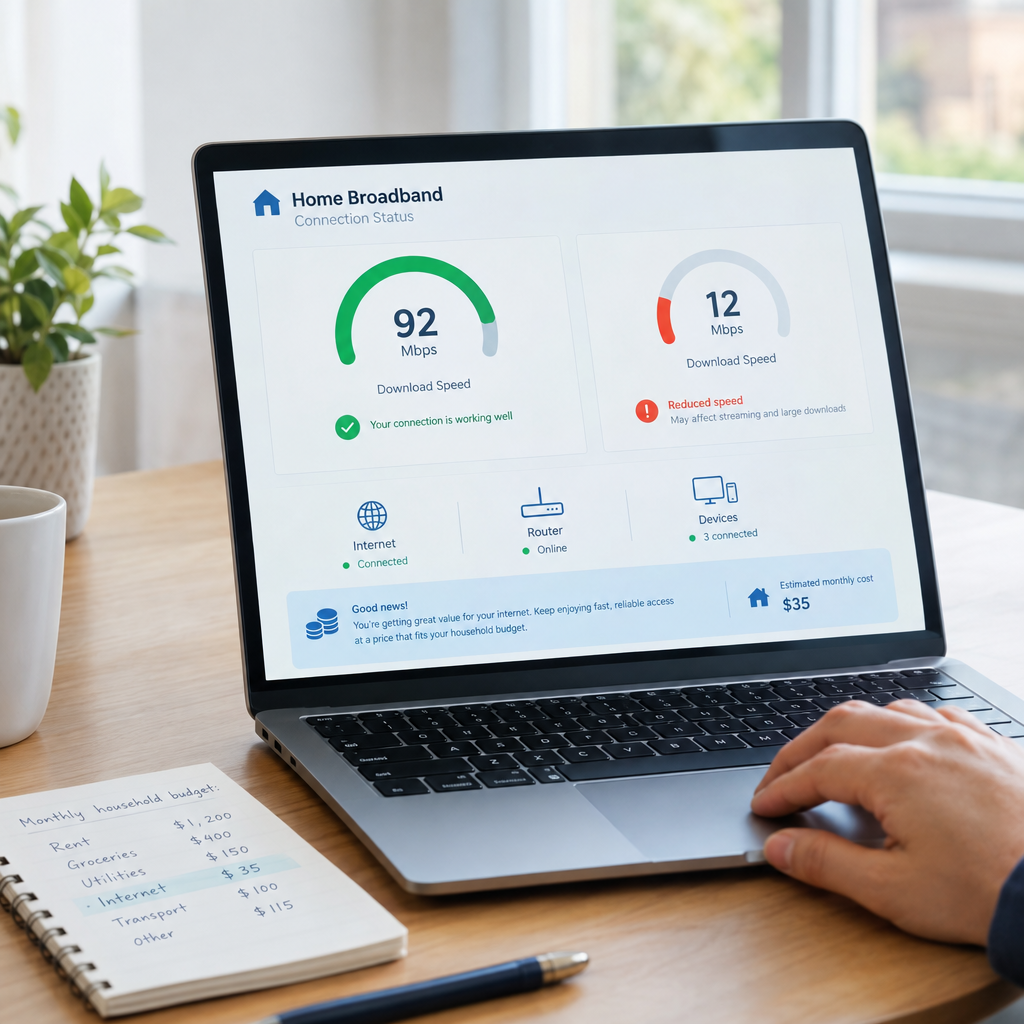
A data cap limits how much information a customer can use during a billing period. Once that limit is reached, a provider may charge extra, restrict service or take another action described in the contract. Throttling means reducing connection speed, often after a certain level of use or during particular network conditions.
These policies can affect everyday tasks differently. A slower connection might be manageable for basic browsing, but it can disrupt video meetings, cloud backups, online payments or a busy café’s ordering system. Businesses should check not only the advertised speed, but also any usage limits, traffic-management rules and service commitments.
3. Why reliable internet is a business requirement
Consider a small online store that depends on cloud-based stock records and payment processing. If its connection slows at peak times, staff may struggle to update orders, customers may abandon checkout and support requests can pile up. A clinic, booking service or warehouse can face similar problems when appointments, dispatch systems or customer records are online.
We recommend treating connectivity as part of business continuity. Identify which operations would stop during an outage or slowdown, and decide what the team should do next. Depending on the business, that could mean a backup connection, a documented manual process or a clear way to notify customers about delays.
4. Put connectivity costs and performance in view
When a business has several locations, providers or internet plans, it can be difficult to see whether service is matching expectations. A simple monthly review can compare invoices, advertised terms, reported incidents and any recurring slowdowns. Keep a record of when problems happen and which business functions they affect.
We at Best Choice can build tailored digital workflows that bring relevant service information into one place, connect it with existing business systems and send alerts when a cost or performance issue needs attention. The goal is to help a decision-maker spot patterns sooner—not to replace the provider’s network monitoring or the terms of a service agreement.
5. Make the most of existing systems
Businesses do not always need to replace their entire technology setup to improve visibility. We can assess the tools already in use and, where suitable, connect provider information with a company’s reporting, customer service or operations processes. Open-source platforms can also be part of a solution when they fit the organisation’s needs and can be maintained securely.
For example, a warehouse might route a connection incident to the operations manager, while a booking business could use an automated process to flag repeated service interruptions for review. Third-party tools may also be useful when they can be properly configured and integrated. The right approach depends on the company’s size, existing systems and tolerance for downtime.
6. What Danish and European businesses can take away
The New York situation concerns a specific state law and should not be assumed to apply in Denmark or elsewhere in Europe. Rules and consumer protections differ by country, so businesses should review local requirements and their own provider contracts. In Denmark and across the EU, it is sensible to compare the full terms of a connectivity plan rather than relying only on its headline speed or price.
Our advice is to document your connectivity needs, check how your plan handles heavy use, and decide how you will respond to a disruption. If you want to connect monitoring, reporting and business workflows—or make your digital operations more resilient—contact Best Choice. We can help you find a practical solution that fits the way your business works.