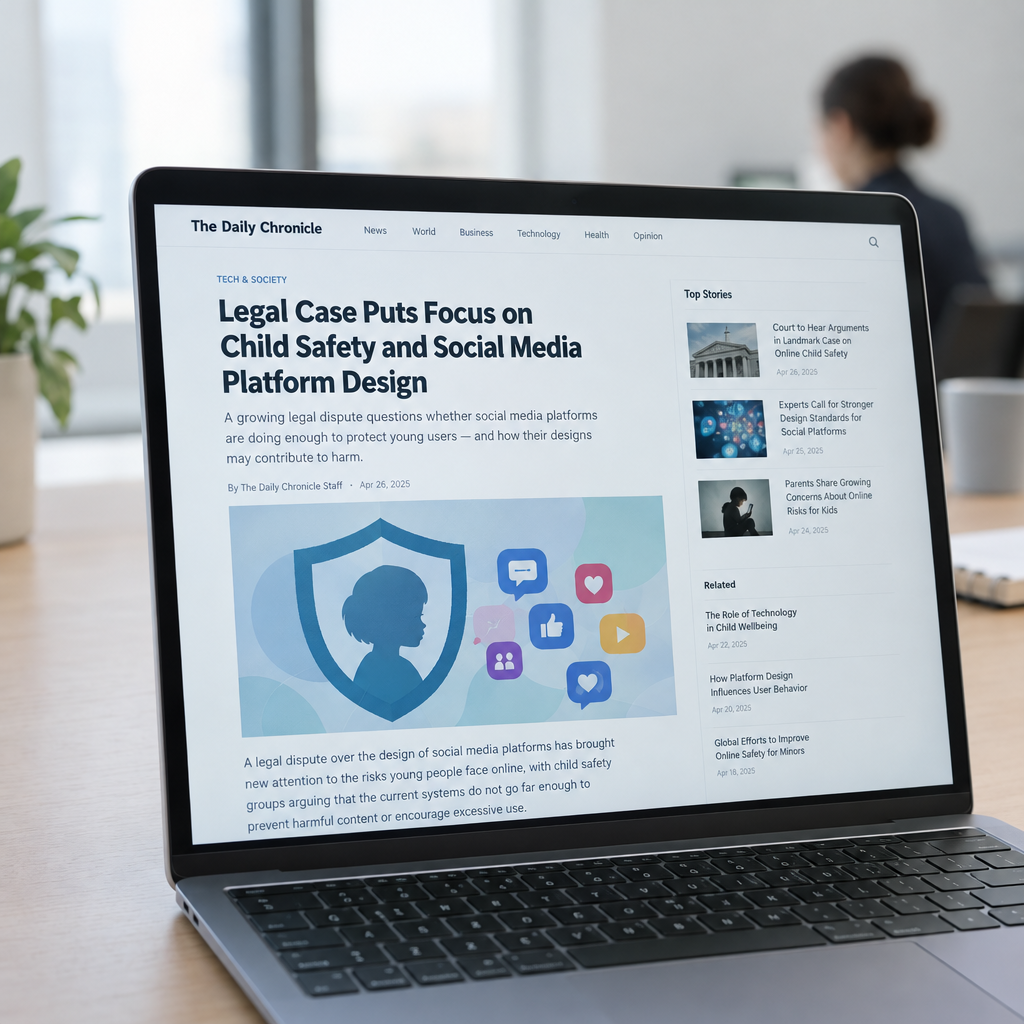
Google, Meta and TikTok Challenge California’s Social Media Law for Children
Google, Meta and TikTok are suing California to block Assembly Bill 1709, a law intended to protect children online. The bill demands that social media platforms remove features described as “psychologically exploitative”—putting the design of digital services, not just their content, at the centre of the debate.
For business owners, this case raises a wider question: how can digital products keep people engaged without using design that may cause harm? Whether you run an online shop, a booking service or a community platform, thoughtful product design can support customers, protect trust and make compliance easier as expectations around online safety develop.
1. What is California’s AB 1709 about?
Based on the reported details, AB 1709 aims to make social media companies remove features considered psychologically exploitative, particularly in relation to children. The challenge from Google, Meta and TikTok shows that there is disagreement over how such requirements should be defined and enforced.
That distinction matters. A rule about specific design features can affect how a platform works, while a rule about harmful content focuses on what users post or see. The lawsuit puts the boundary between those approaches under scrutiny.
2. Why are platform design features under debate?
Digital products are built to guide user behaviour. Notifications, personalised feeds, autoplay and reward-style interactions can make an app easier or more appealing to use, but they can also encourage people to spend more time on it than they intended.
The challenge for product teams is to balance usability and engagement with user wellbeing. For example, an online service might offer clear notification controls, a natural stopping point or a chronological feed option. These choices can support a better customer experience without relying on constant prompts to return.
3. What could this mean for businesses in Denmark and Europe?
A California law does not automatically apply to every Danish or European business. However, companies serving customers in multiple countries may need to consider different legal and regulatory expectations. In Europe, privacy rules such as the GDPR and digital regulation such as the Digital Services Act are relevant considerations, depending on the service and its role.
Business leaders should avoid assuming that one technical or legal approach works everywhere. Instead, identify which users your service reaches, what data it collects, how its features influence behaviour, and which rules apply. Where children may use a service, it is sensible to take extra care and seek qualified legal advice.
4. How custom-built technology can support safer design
At Best Choice, we build digital systems around a company’s actual processes and customer needs. That gives a business more control over how its website, app or platform behaves, rather than forcing every workflow into a generic template.
For instance, a booking service could use practical reminders that customers can manage, rather than repeated messages designed simply to draw them back. An online shop could make recommendations transparent and give users control over preferences. A custom-built solution can also include access controls, consent flows and data-management features that fit the service from the start.
5. Practical steps for reviewing your digital service
You do not need to wait for a court ruling to make your product clearer and more responsible. Start by reviewing the features that prompt users to act, the information collected, and the choices customers have. Ask whether each feature provides a real benefit—or mainly increases time spent or repeat visits.
- Map key user journeys: Note where users receive prompts, make decisions or share personal information.
- Make controls easy to find: Let people manage notifications, preferences and consent without unnecessary steps.
- Review data collection: Keep it relevant to the service and explain its purpose in plain language.
- Test with real users: Look for confusing or pressuring interactions, including on mobile devices.
- Document decisions: Keep a record of why features exist and how you assess their impact.
6. Build trust while keeping workflows efficient
Responsible design is not only a compliance exercise. A clinic that sends useful, well-timed appointment reminders can reduce missed visits. A café with a straightforward ordering system can help customers place an order quickly. A warehouse or online store can use automation to keep stock and order updates accurate without bombarding customers with unnecessary messages.
Well-designed automation helps businesses save staff time while making digital interactions more useful. Open-source platforms such as WordPress can provide a flexible foundation for websites, while custom integrations can connect forms, booking tools, customer records and internal workflows. The right setup depends on your users, operations and technical requirements.
Conclusion: Make digital experiences work better for people
The lawsuits over California’s AB 1709 reflect a bigger debate about how technology should influence people’s attention, especially when children may be involved. Businesses can respond constructively by reviewing product design, offering meaningful user controls and building services that earn engagement through genuine value.
We at Best Choice can help you assess your digital workflows, build or improve websites and apps, and connect the tools your business relies on. Contact us to discuss a practical, user-focused solution for your company.