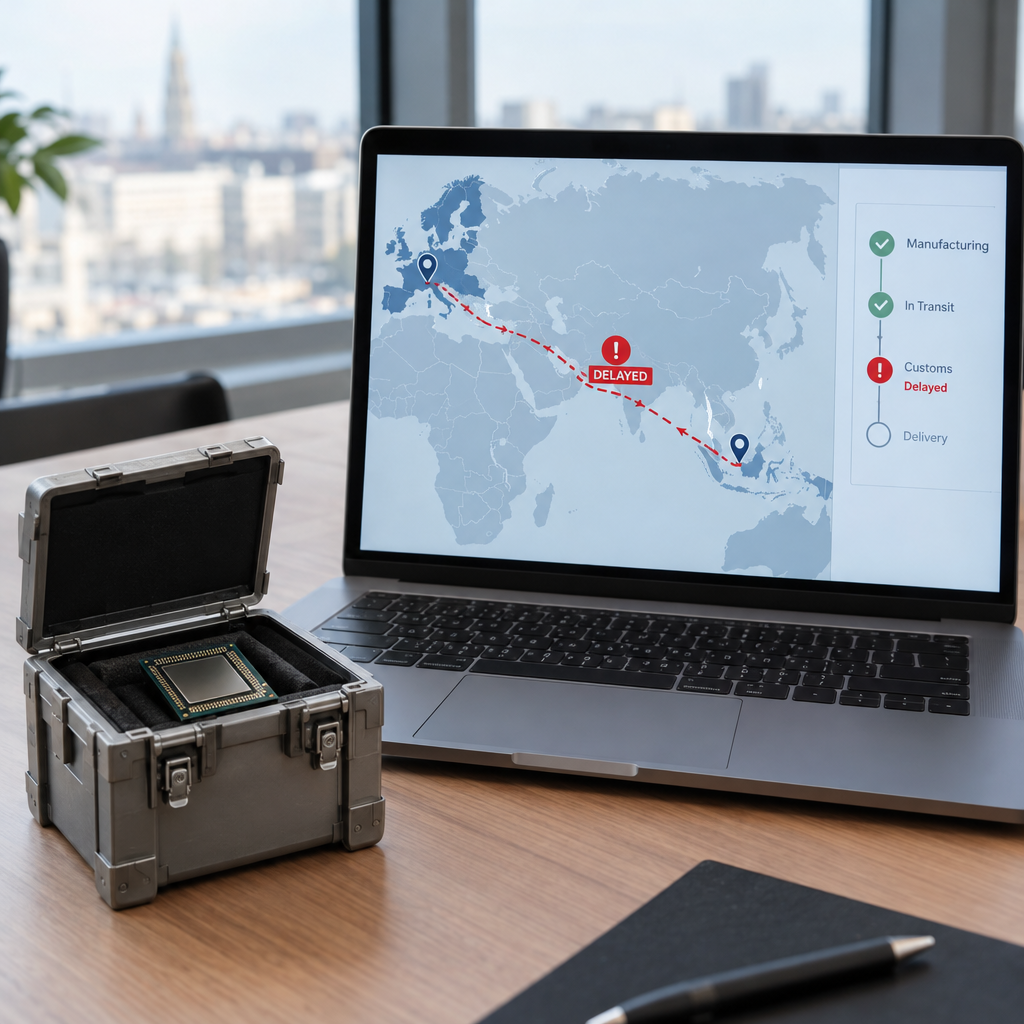
Reports that NVIDIA has halted or restricted AI chip shipments to parts of Southeast Asia are a reminder that access to computing hardware can change quickly. The details and scope of the reported restrictions are not yet clear, so businesses should avoid treating the news as confirmation of a permanent supply disruption.
For companies in Denmark and across Europe, the wider lesson is clear: an AI project should not depend on a single supplier, location, or type of chip. At Best Choice, we help businesses design practical AI and data systems that can adapt to changing infrastructure, control costs, and keep essential workflows running.
1. Why reports about AI chip shipments matter
Advanced chips power many of the systems used to train and run AI models. If shipments are delayed or redirected, providers may face tighter capacity, higher prices, or longer wait times for new computing resources. The impact will vary depending on which products, customers, and countries are affected.
Even businesses that do not buy chips directly can feel the effects. A cloud provider’s hardware constraints may influence the availability, performance, or cost of the AI services that a company uses for customer support, document processing, forecasting, or software development.
2. What this could mean for European businesses
For a Danish online store, limited AI capacity could affect tools that generate product descriptions, analyse customer questions, or forecast demand. A clinic exploring AI for administrative work may need to consider where data is processed and whether the service can meet its privacy and security requirements.
These are not reasons to abandon AI. They are reasons to plan carefully. Businesses should assess how dependent each workflow is on a particular AI provider, how quickly it could move to another option, and what would happen if a service became slower or more expensive.
3. Build AI workflows that can adapt
We at Best Choice can build custom AI workflows around a company’s actual processes instead of tying the whole operation to one model or hardware supplier. For example, a support system can classify incoming enquiries, search approved company information, and prepare draft replies, while staff remain responsible for sensitive or unusual cases.
The system can be designed with a flexible connection layer, so the business can change the AI model or hosting provider without rebuilding the entire workflow. This makes it easier to compare cost, speed, data handling, and output quality as services change.
4. Consider cloud, local, and open-source options
Cloud AI services can be convenient because they are quick to start and do not require a business to purchase and maintain specialist hardware. However, companies should review pricing, data-processing terms, availability, and the practical process for switching providers.
Open-source models, including models from projects such as Llama and Mistral, may offer more choice in how AI is hosted and adapted. They still require suitable computing resources, technical support, and careful testing. We can help evaluate whether a hosted service, a self-managed setup, or a combination is appropriate for a company’s needs.
5. Practical steps to reduce supply and service risk
Businesses do not need to make a large hardware investment to improve resilience. Start by identifying which workflows rely on AI and what each one needs in terms of response time, accuracy, privacy, and cost. Then consider what a reasonable fallback would be if the preferred service were unavailable.
- Map dependencies: Record the AI providers, cloud services, integrations, and data sources used in each workflow.
- Test alternatives: Compare more than one model or service against real business tasks.
- Keep human review: Require approval for important decisions, customer commitments, and sensitive information.
- Plan for continuity: Decide which tasks can pause, switch to a simpler process, or move to a backup service.
- Review data handling: Check access controls, retention, and relevant privacy obligations, including GDPR.
6. Turn resilience into a business advantage
A warehouse could use AI to help categorise incoming orders and flag unusual stock patterns, while retaining a manual process for urgent exceptions. If one model becomes unavailable, a well-designed workflow can route routine tasks elsewhere or temporarily rely on clear staff procedures.
A booking service or café could use AI to draft responses to common customer questions and identify busy periods from historical data. The business benefits not because it has the most expensive hardware, but because its systems are designed to save time and keep working when conditions change.
For European companies, resilience also means choosing an approach that fits their data, budget, and operational requirements. We can connect AI tools to existing websites, databases, CRM systems, and internal processes, then help monitor performance and improve the workflow over time.
Conclusion
Reports of NVIDIA shipment restrictions are still uncertain, but they highlight a real business concern: AI infrastructure and services can be affected by changing supply, pricing, and availability. Companies can prepare by avoiding unnecessary dependence on one provider and designing workflows that have tested alternatives.
If you are planning an AI project or want to make an existing system more flexible, contact Best Choice. We can help you assess your needs and build an approach that supports your business today while giving you room to adapt tomorrow.