OpenAI Is Testing Dots Personal Agents on Its $20-a-Month Plus Tier
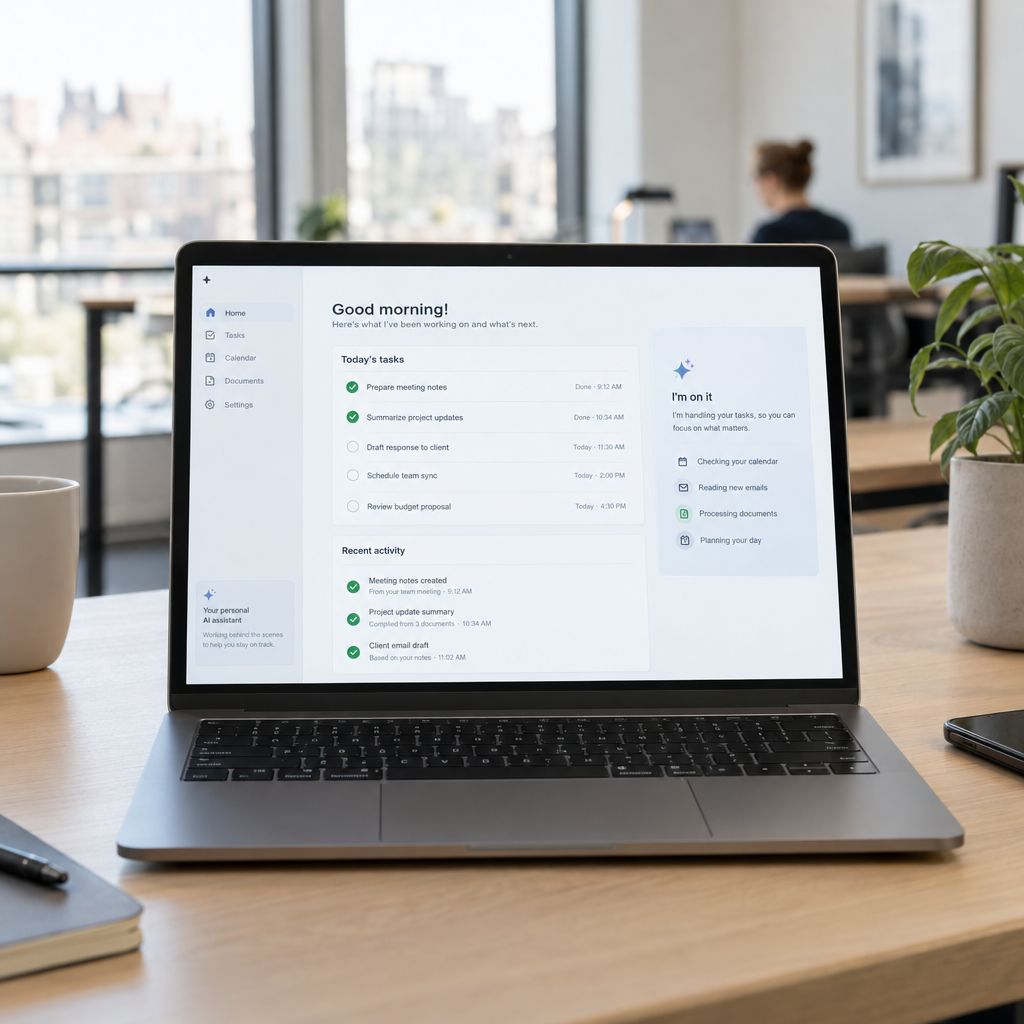
AI assistants are beginning to move beyond answering questions. OpenAI is reportedly testing Dots, personal agents designed to take action proactively, with some users on its Plus plan. The idea is simple: instead of asking an AI to help with every step, you give it a goal and let it handle parts of the work.
For business owners, this raises an important question: where could an AI agent save time in your company, and where should a person stay in control? At Best Choice, we help businesses explore practical AI and automation opportunities, connecting tools to real workflows rather than adopting technology for its own sake.
1. What are personal AI agents?
A standard chatbot responds when you send a message. An AI agent aims to complete a task across several steps, potentially using connected tools or information to do so. A personal agent might, for example, help organise a schedule or prepare a summary, depending on the features and permissions available to it.
OpenAI’s Dots are described as proactive personal agents, but the available information about the test is limited. Business leaders should treat early access as an indication of where AI is heading, not as proof that a new agent can safely handle every task without supervision.
2. Why the Plus-tier test matters to businesses
Testing agents through a widely used consumer subscription could make this kind of AI easier for more people to try. The reported price is $20 per month for Plus, though pricing, availability and features can vary by country and may change. A consumer plan is not automatically a suitable business solution: companies also need to consider data access, security, accountability and integration with existing systems.
For a Danish online store, an agent might help staff review routine customer questions or prepare a daily overview of orders. In a clinic, it could assist with administrative work such as organising information for staff, provided patient data is handled through an approved, secure process. In both cases, people should check important decisions and customer-facing outputs.
3. Where agents can reduce routine work
The strongest business use cases often involve repeatable tasks that consume staff time but still benefit from human review. An agent can potentially gather information, draft a response, organise a request or prepare a report. The exact tasks depend on the tools it can access and the rules the business sets.
- Cafés and restaurants: help organise booking enquiries and draft replies about opening hours or menus.
- Warehouses: prepare summaries of stock exceptions or flag records that need checking.
- Online shops: sort incoming support requests and help staff find relevant order information.
- Booking services: assist with appointment enquiries and highlight scheduling conflicts for a person to resolve.
These examples are most valuable when they fit into the workflow employees already use. Automation should reduce repeated admin, not create another disconnected system to maintain.
4. From a personal agent to a business workflow
A consumer AI agent may be useful for individual productivity, but a business often needs something more tailored. At Best Choice, we can build custom AI and automation workflows around the company’s systems, permissions and processes. That might mean connecting a website enquiry form to a CRM, routing requests to the right employee, and preparing a draft response for approval.
For example, a booking business could receive a request, check availability in its booking system, and create a follow-up task in its CRM. We can help define which steps are automatic, which require staff approval, and what should happen when information is missing. This makes the solution easier to measure and safer to operate than a general-purpose assistant working without clear boundaries.
5. Integrations, open-source tools and control
AI agents become more useful when they can work with relevant business data, but integrations must be designed carefully. We can connect AI features to websites, databases, CRMs, booking systems and other services where appropriate. We also help businesses limit access so an automation can use only the information and actions it needs.
For organisations that want more control over their technology, open-source frameworks such as LangGraph or Haystack can be used to develop AI workflows. These are not ready-made replacements for a business process: they need configuration, hosting, testing and ongoing maintenance. The right choice depends on the required flexibility, technical resources and data policies.
6. How to test AI agents responsibly
Start with one low-risk task that happens often and has a clear result, such as categorising general enquiries or preparing an internal summary. Record how long the task takes today, then compare the time, quality and error rate after introducing automation. Keep a person responsible for checking outputs, especially when they affect customers, money, health information or contractual decisions.
- Define the task and the agent’s limits before connecting systems.
- Use test data first and review what information the tool can access.
- Require approval for sensitive actions, such as payments or changes to customer records.
- Check privacy, security and applicable European data-protection requirements.
- Give staff a clear way to report errors and pause the automation.
Conclusion: Make AI useful for your business
OpenAI’s reported Dots test reflects a broader shift from conversational AI towards agents that can help carry out tasks. For businesses in Denmark and across Europe, the opportunity is real—but the best results come from carefully chosen use cases, secure integrations and clear human oversight.
We at Best Choice can help you assess where AI agents and automation could improve your workflows, save staff time and support better customer service. Contact us to discuss a practical solution built around your business.