What the Palantir Spy and Harassment Allegations Mean for Business Cybersecurity
The US Department of Justice (DOJ) says a Russian national was ordered to spy on and harass Palantir employees over the company’s software being used by Ukraine in wartime. The allegations are a reminder that cyber and corporate threats do not always target systems alone: employees, their families and their personal information may also be targeted.
For business owners and decision-makers in Denmark and across Europe, the case highlights a practical challenge: how do you protect people and operations when threats can move between digital accounts, public information and real-world contact? At Best Choice, we help businesses build joined-up security and automation solutions that make suspicious activity easier to spot and routine protective measures easier to manage.
1. Why threats can target employees, not just IT systems
Many organisations focus on firewalls, malware and stolen passwords. Those controls matter, but people can also be targeted through impersonation, persistent unwanted contact, phishing, or the misuse of information that is already public. A campaign aimed at employees can create stress, disrupt work and expose sensitive business details.
Companies working in technology, defence, logistics, research or public services may face extra attention because of their customers or the role their products play. But smaller firms are not immune: a targeted attack on a manager, accountant or supplier can be enough to disrupt a whole operation.
2. Build a clear picture of your exposure
A useful first step is to understand which people, systems and processes would cause the greatest risk if targeted. This does not mean monitoring employees’ private lives. It means reviewing business accounts, access rights, public-facing contact details, supplier connections and the ways staff report suspicious messages or contact.
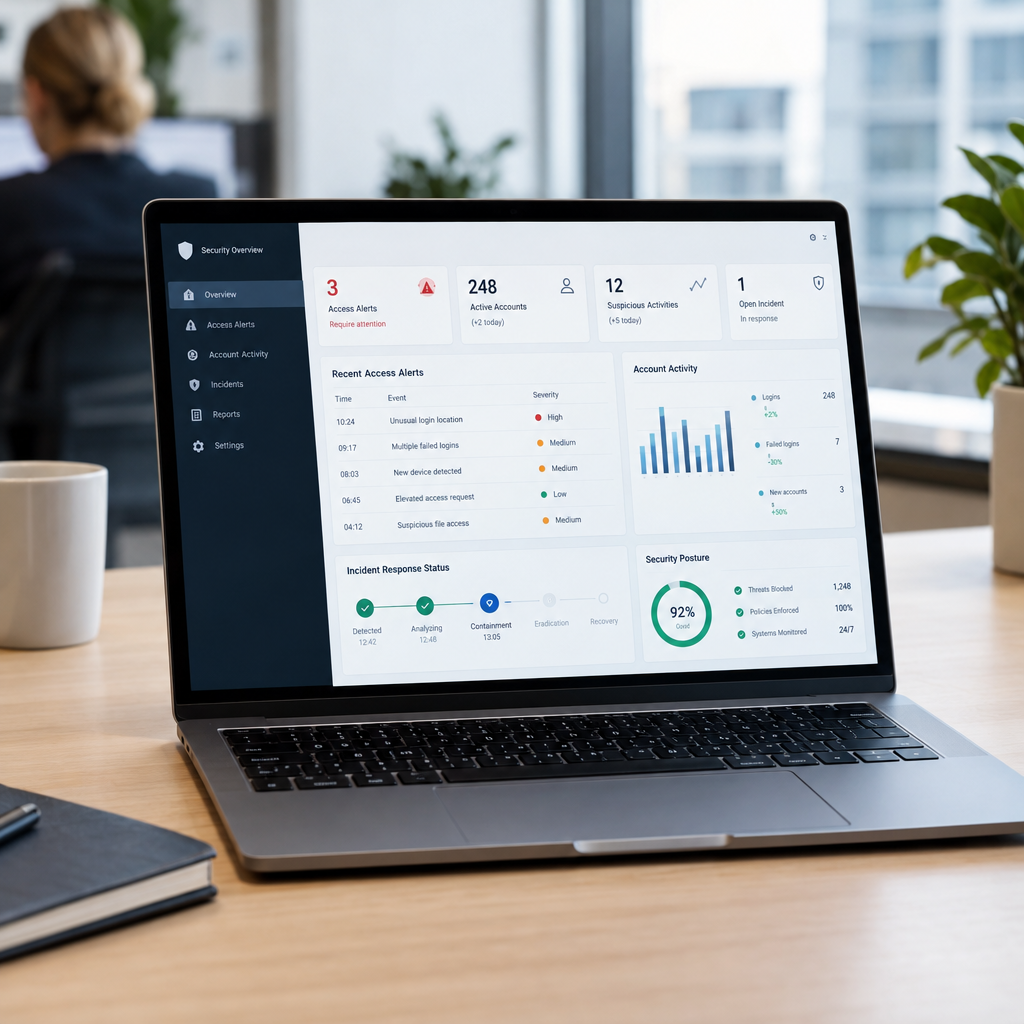
We at Best Choice can help bring relevant information into a practical overview. Custom-built dashboards and workflows can connect security alerts, employee reports and access records, so the right people can see what needs attention without searching across disconnected tools.
- Identify essential systems and the people who can access them.
- Review administrator accounts and remove access that is no longer needed.
- Give employees a simple, confidential way to report suspicious contact.
- Agree who assesses an incident and who communicates with staff.
3. Make secure access part of everyday work
Strong security should support work, not make every task difficult. Multi-factor authentication, role-based access and timely removal of former employees’ accounts can reduce the impact of stolen credentials. Automated checks can also flag unusual login patterns or unexpected changes to access rights for human review.
We build integrations and tailored workflows around the way a business actually operates. For example, a clinic can connect staff onboarding to account creation, while a warehouse can make sure temporary workers receive access only to the systems they need, for the period they need it.
4. Prepare for harassment and suspicious contact
When an employee receives threatening or persistent contact, they should not have to decide alone whether it is serious. A clear response plan can explain how to preserve messages, who to notify, how to secure relevant accounts and when to escalate the matter to appropriate authorities or professional advisers.
Businesses can use a structured reporting form and internal case workflow to record incidents consistently, restrict sensitive information to authorised staff and track follow-up actions. We can develop these processes to fit a company’s existing systems, helping managers respond promptly while respecting employee privacy and applicable data-protection rules.
5. Choose tools that fit your organisation
Some organisations benefit from open-source security components. For example, Wazuh can support security monitoring, while Keycloak can provide identity and access-management capabilities. These tools require careful configuration, maintenance and integration; installing software alone does not create a complete security programme.
We can assess whether open-source tools suit your needs and connect them with existing business systems. Where a company already uses commercial cloud or security services, we can help configure and integrate those as well. The right setup depends on your risks, staff capacity, budget and obligations—not on adopting the largest number of tools.
6. Turn the lesson into a practical security plan
The DOJ’s claims are allegations, and a news report is not a substitute for a formal risk assessment. Still, the case offers a useful prompt for businesses to review how they protect employees as well as technology. In Europe, organisations should also consider relevant privacy and cybersecurity obligations, including GDPR and, where applicable, NIS2 requirements.
Start with a short review: identify critical systems, check access controls, test how staff report suspicious activity and make sure someone owns incident response. At Best Choice, we can help you turn those findings into practical IT security, integrations and automation that fit your business. Contact us to discuss a safer, more manageable way to protect your people and operations.