SpaceX’s million-satellite plan: What an orbital AI data centre could mean for businesses
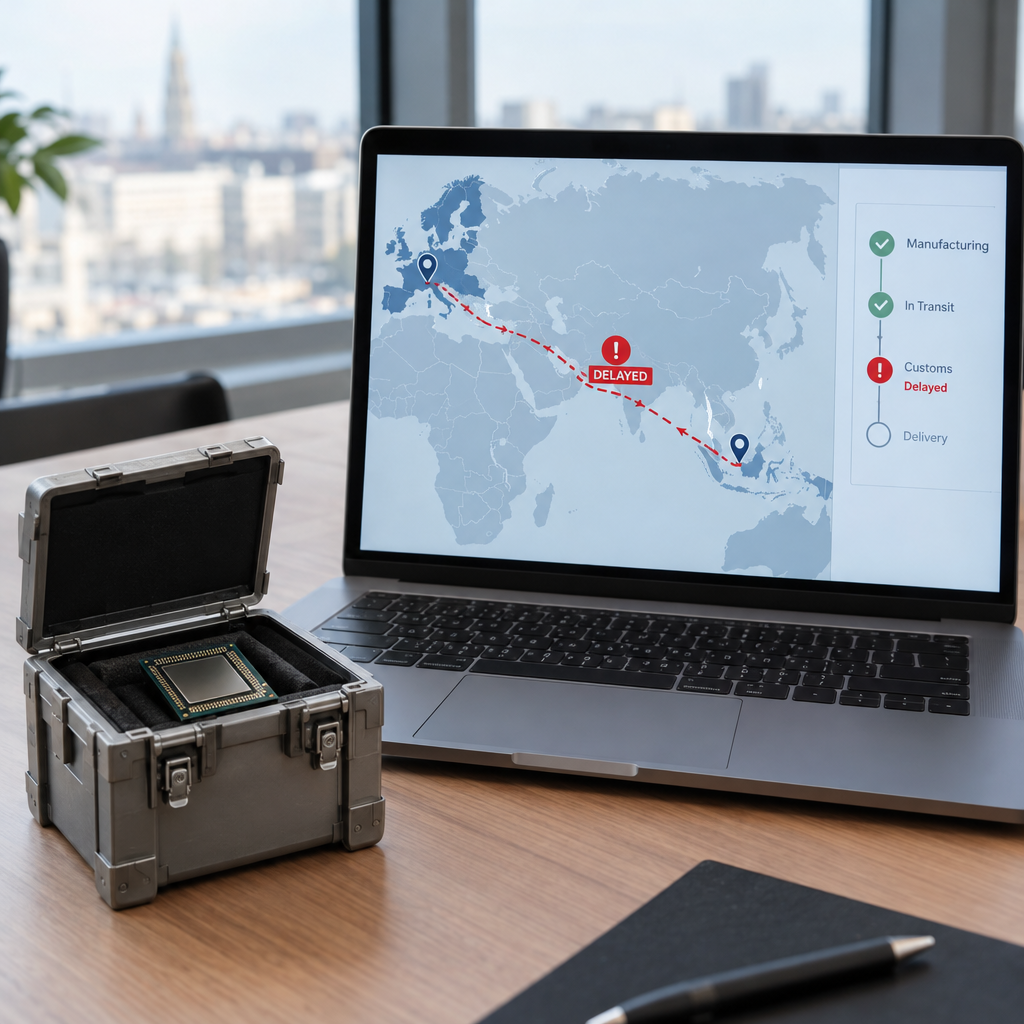
The US Federal Communications Commission has approved SpaceX’s request to deploy up to one million satellites for an AI data centre in orbit. The proposal points to an ambitious new direction for computing: putting data-processing infrastructure above Earth rather than relying only on facilities on the ground.
For businesses in Denmark and across Europe, this is a development to watch, not a reason to change IT systems overnight. An approval does not mean a million satellites are already in orbit or that an orbital data centre is ready for everyday business use. But it raises practical questions about AI capacity, connectivity, data privacy and how companies should prepare for a changing cloud landscape.
1. What is an orbital AI data centre?
A data centre houses the computers, storage and networking equipment used to run software and process information. An orbital data centre would place some of that computing infrastructure on satellites, connecting it with other satellites and systems on Earth.
The idea is to use space-based infrastructure for certain workloads and potentially connect it with satellite communications. However, operating powerful computing equipment in orbit brings major engineering challenges, including power supply, cooling, maintenance and reliable communication. The FCC decision is an important regulatory step, but it does not resolve those challenges by itself.
2. Why businesses should pay attention
AI is increasing demand for computing power. Companies use it to analyse sales, automate customer service, forecast stock levels and process documents. If new infrastructure eventually adds capacity or provides connectivity in places with limited terrestrial networks, it could expand the options available to businesses.
Consider a warehouse in a remote area that needs dependable links between stock systems and a central office, or a logistics company tracking vehicles across borders. Satellite connectivity may be relevant to these operations. But for most Danish businesses, the immediate opportunity is still to improve how existing cloud services, business software and data are used.
3. Build a flexible foundation before adopting new infrastructure
At Best Choice, we help businesses create custom-built IT solutions that fit their workflows rather than forcing teams into a one-size-fits-all setup. That can mean connecting a webshop to inventory and accounting systems, automating routine reporting, or building a dashboard that gives managers a clear view of operations.
A flexible architecture makes it easier to change providers or add new services later. We can help you organise data, connect systems through APIs and design integrations that avoid locking essential business processes into one platform. If new AI or connectivity services become practical, a well-structured system is easier to adapt.
4. Put data protection and compliance first
For European organisations, where data is processed can matter as much as how quickly it is processed. Businesses handling customer, employee or health information should assess privacy, security, access controls and contractual responsibilities before sending data to any new service. Requirements such as the GDPR may be relevant, depending on the data and use case.
A clinic, for example, should not move patient information into an AI tool simply because it promises faster results. A safer first step is to identify what data is needed, minimise personal information, control access and document how information flows between systems. We can help map those flows and build integrations with appropriate safeguards.
5. Use AI where it solves a real operational problem
New computing capacity does not automatically create business value. The strongest AI projects start with a specific task: reducing repetitive administration, finding patterns in sales data or helping staff answer common customer questions. A booking service might automate confirmations and reminders, while an online store could use demand data to improve replenishment decisions.
Open-source technologies such as PostgreSQL for databases and tools such as Kubernetes for deploying applications can form part of a flexible technology stack. The right choice depends on your needs, security requirements and existing systems. We can assess the options, integrate suitable tools and develop custom software around your actual processes.
6. Track the rollout—and make practical decisions now
Space-based computing will need to prove its reliability, cost, performance and suitability for different workloads. Businesses should also watch how regulation develops, including questions around orbital congestion, environmental effects and international data governance. For companies operating across Denmark and Europe, cross-border rules and supplier agreements deserve particular attention.
- Review your current systems: Find manual processes, duplicated data and fragile integrations.
- Prioritise useful AI projects: Start with a measurable business problem and a small, controlled test.
- Plan for portability: Keep data and integrations organised so future technology choices remain open.
- Check security and compliance: Understand what information is shared, where it goes and who can access it.
Prepare your business for what comes next
SpaceX’s FCC approval is a significant signal of ambition, but an orbital AI data centre is not yet a standard business service. The best preparation is to make your existing data, software and workflows more connected, secure and adaptable.
At Best Choice, we help businesses across Denmark and Europe automate processes, integrate systems and build custom digital solutions. Contact us to discuss how to make your IT ready for practical AI opportunities—whether they run in today’s cloud or on tomorrow’s infrastructure.