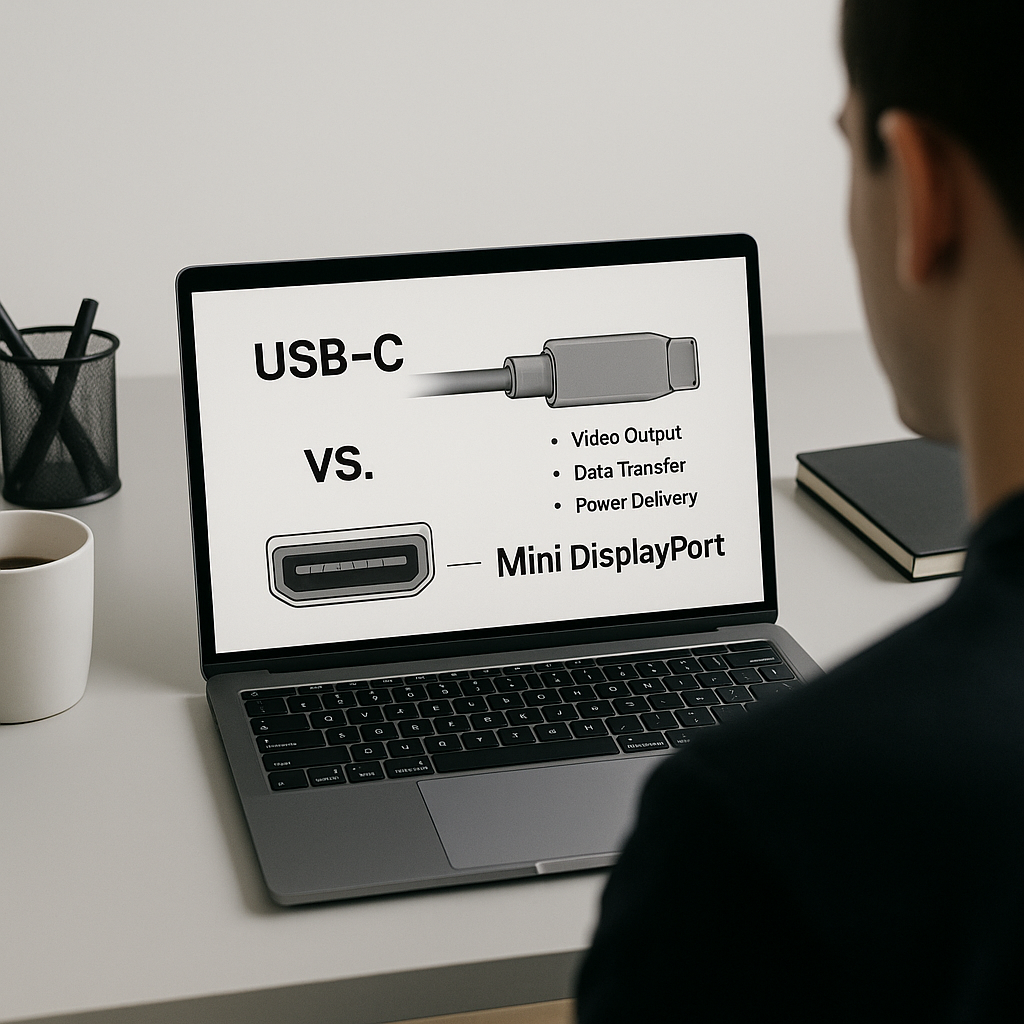
Is Mini DisplayPort Becoming Obsolete?
As technology rapidly evolves, many of us are left wondering which devices and standards will stand the test of time. A prime example of this is the Mini DisplayPort, once a staple for connecting laptops and monitors. However, as I’ve observed in the tech landscape, its prevalence has waned significantly over recent years. Today, I want to delve deeper into why the Mini DisplayPort is becoming less common and what that means for business decision-makers and entrepreneurs like you.
Understanding the evolution of display connectivity can help us navigate our choices as we set up and improve our digital work environments. As we move toward more advanced technologies, it’s crucial for businesses to ensure they are leveraging the best tools available for efficiency, productivity, and connectivity.
The Rise and Fall of Mini DisplayPort
Mini DisplayPort, introduced by Apple in 2008, became a go-to connector for many devices due to its compact size and high-quality video output. It gained traction amongst multimedia professionals, gamers, and anyone needing to connect to high-resolution displays. However, newer technologies have started to take their place, raising the question: what happened to Mini DisplayPort?
Emergence of USB-C and Thunderbolt 3
One of the primary reasons for the decline of Mini DisplayPort is the emergence of the USB-C and Thunderbolt 3 standards. These versatile ports can handle not only video output but also power delivery and data transfer, making them incredibly appealing for modern devices.
For instance, if you own a digital marketing agency, ensuring your laptops and devices can connect seamlessly with high-resolution monitors is essential for rendering graphics and presentations. Migrating to USB-C can streamline your workspace as these ports allow you to connect various peripherals with a single cable. This flexibility can save time and enhance productivity.
Changing Industry Standards
The technology industry is all about standardization. Many manufacturers are moving towards universal connectivity solutions, pushing the Mini DisplayPort out of the race. As a business, this transition means that you need to consider how your equipment will communicate with new devices on the market.
- Is your staff equipped with the latest devices that support USB-C?
- Have you updated your office setup to match these emerging standards?
These questions are critical in staying relevant in a competitive market. By ensuring your technology is not outdated, you can avoid disruptions and take advantage of faster, more reliable connections.
Real Business Implications
Impact on Industries
Let’s look at how adapting to these changes has real implications for various sectors, highlighting the urgency of staying current.
- Creative Professionals: Graphic designers, video editors, and digital creators require reliable connections to high-res displays. Transitioning to USB-C can simplify their setup.
- Retail and Services: In retail, point-of-sale systems now often utilize tablets with USB-C, helping streamline sales processes.
- Education: Educational institutions are adopting smarter technologies with USB-C, allowing students to connect their devices effortlessly in classrooms.
Embracing Change for Workflow Efficiency
As a decision-maker, it’s essential to adapt quickly to changes in technology that impact workflow efficiency. Investing in future-proof solutions, such as streamlined connectivity options, contributes to operational efficiency, saving time, and enhancing client satisfaction.
Actionable Insights
Given the shift away from Mini DisplayPort, here are a few actionable tips to consider:
- Assess your current hardware and determine if it supports modern standards like USB-C or Thunderbolt 3.
- Invest in adapters if transitioning entirely is not feasible yet, allowing for backward compatibility while you upgrade.
- Stay informed on technology trends related to connectivity to future-proof your investments.
Conclusion
In conclusion, the decline of the Mini DisplayPort signifies a larger trend towards more versatile and efficient connectivity solutions. By understanding the potential obsolescence of certain technologies, we at Best Choice encourage you to critically assess and update your business’s tech landscape to keep up with these shifts.
Are you ready to embrace the changes in technology for your business? If you’re considering an upgrade or simply want to explore your options, don’t hesitate to contact us. We’re here to help you navigate the world of IT solutions tailored to your needs.