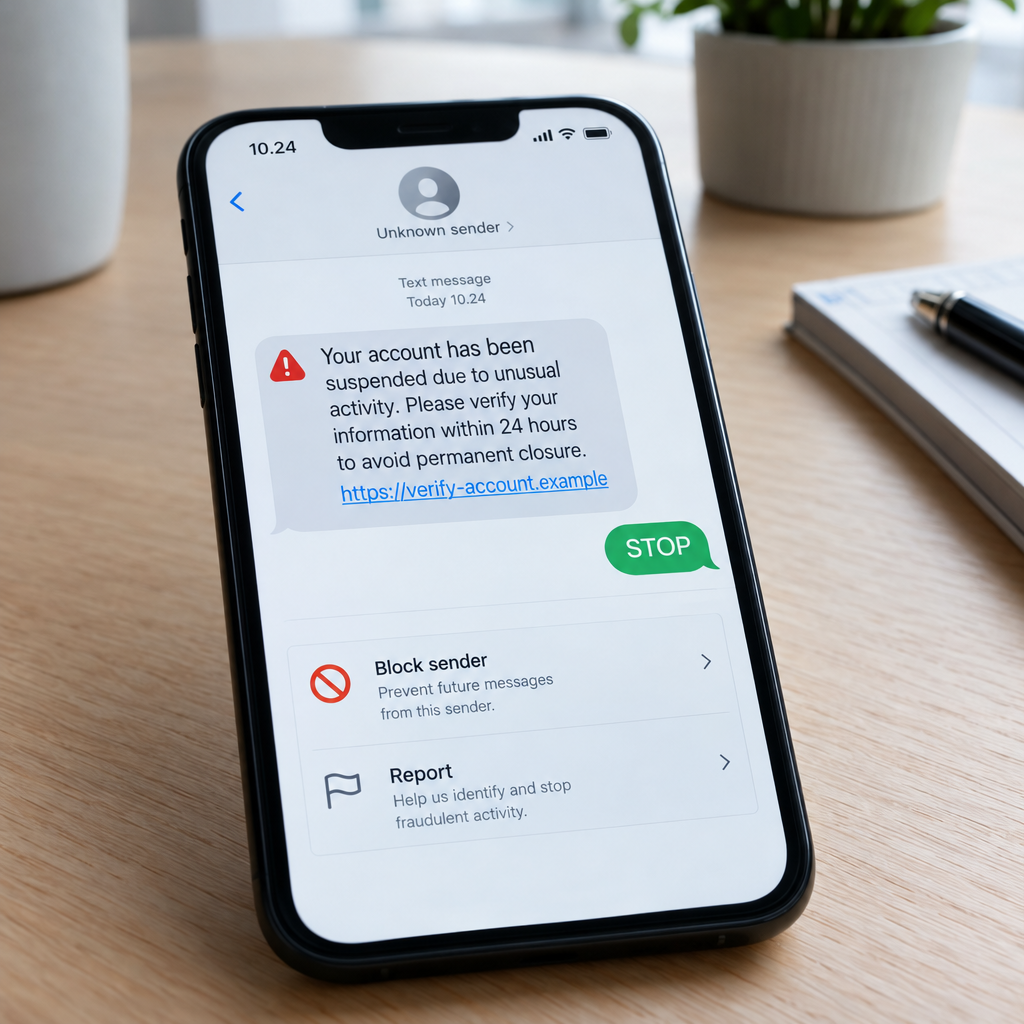
Why You Should Never Reply “STOP” to a Suspicious Spam Text
An unexpected text message may look like a delivery update, an unpaid invoice or a security warning. It may even offer a simple way to unsubscribe: reply “STOP.” That can be the right choice when the message comes from a business you recognise and trust—but it is not a safe response to every text.
When a message is a scam, replying can confirm that your phone number is active and monitored. That may lead to more unwanted messages or targeted attempts to steal information. At Best Choice, we help businesses create safer, more reliable digital communication, and we believe knowing when not to reply is an important part of protecting yourself and your customers.
1. Why scammers want you to reply
A scammer may not know whether a phone number belongs to a real person or whether anyone reads its messages. A reply—even a single word such as “STOP”—can provide that confirmation. The number may then be marked as active and targeted with more convincing messages.
Scammers can also use replies to start a conversation, build trust and encourage you to share personal details. A text that appears to come from a courier, bank or online shop could be the opening step in a phishing attempt. The safest response to a suspicious message is usually no response at all.
2. When replying STOP may be appropriate
Legitimate businesses often include “Reply STOP to unsubscribe” in marketing texts. If you recognise the sender, have previously given permission to receive messages, and the text is clearly expected, replying STOP can be a straightforward way to opt out.
But do not rely on the sender name alone. Scammers can make a message appear to come from a familiar organisation. If you are unsure, visit the company’s official website or contact it using details you find independently—not a phone number or link in the text.
3. What to do instead of replying
- Do not reply or click links in a message you cannot verify.
- Do not share personal or payment details by text in response to an unexpected request.
- Block the sender using your phone’s messaging controls.
- Report the message through your mobile operator’s or national authority’s official reporting process.
- Check with the organisation directly if the message claims there is an issue with an order, account or payment.
If you have already replied, do not panic. Avoid continuing the conversation, block the sender and stay alert for follow-up messages. If you clicked a link or shared sensitive information, contact the relevant bank or organisation through its official channels and follow its security advice.
4. How businesses can protect their customers
For businesses, trustworthy text communication is part of customer service. A café sending a booking reminder, a clinic confirming an appointment or a warehouse updating a customer about delivery should make it clear who is contacting the recipient and why.
We at Best Choice can build tailored communication workflows that connect a company’s website, booking process or customer database with its messaging service. A well-designed workflow can record consent, identify the business clearly, handle opt-outs and keep a log of messages. This reduces manual work and helps prevent customers from receiving confusing or unexpected texts.
5. Build safer messaging into everyday workflows
Good automation is not just about sending more messages. It is about sending the right message to the right person at the right time. An online shop, for example, can send an order update only after a confirmed purchase, while a booking service can send a reminder linked to a customer’s appointment.
We can also integrate messaging with an existing CRM or booking system through APIs, so staff do not have to copy information between tools. Useful safeguards include limiting who can send bulk messages, checking recipient lists before campaigns and making the opt-out process easy to understand. These measures save time while helping protect customer trust.
6. Keep consent and local rules in mind
Businesses sending marketing messages in Denmark and elsewhere in Europe should take consent and privacy seriously. Requirements can depend on the country and the type of communication, so do not assume that a customer’s phone number automatically gives permission to send promotions. Keep clear records of how permission was obtained and make it simple for people to withdraw it.
Separate useful service updates—such as a delivery notification—from promotional campaigns, and review your process regularly. A custom-built system can help apply your communication rules consistently, but it should be designed around your business and checked against the regulations that apply to your customers.
Protect your number—and your customers’ trust
Replying STOP is useful for messages from verified, reputable senders, but it is not a safe way to deal with every suspicious text. When in doubt, do not engage: verify the sender independently, block the message and report it through an official channel.
If your business wants to make customer messaging safer and more efficient, contact Best Choice. We can help design and integrate a tailored system that supports your workflows, respects customer preferences and reduces repetitive work.