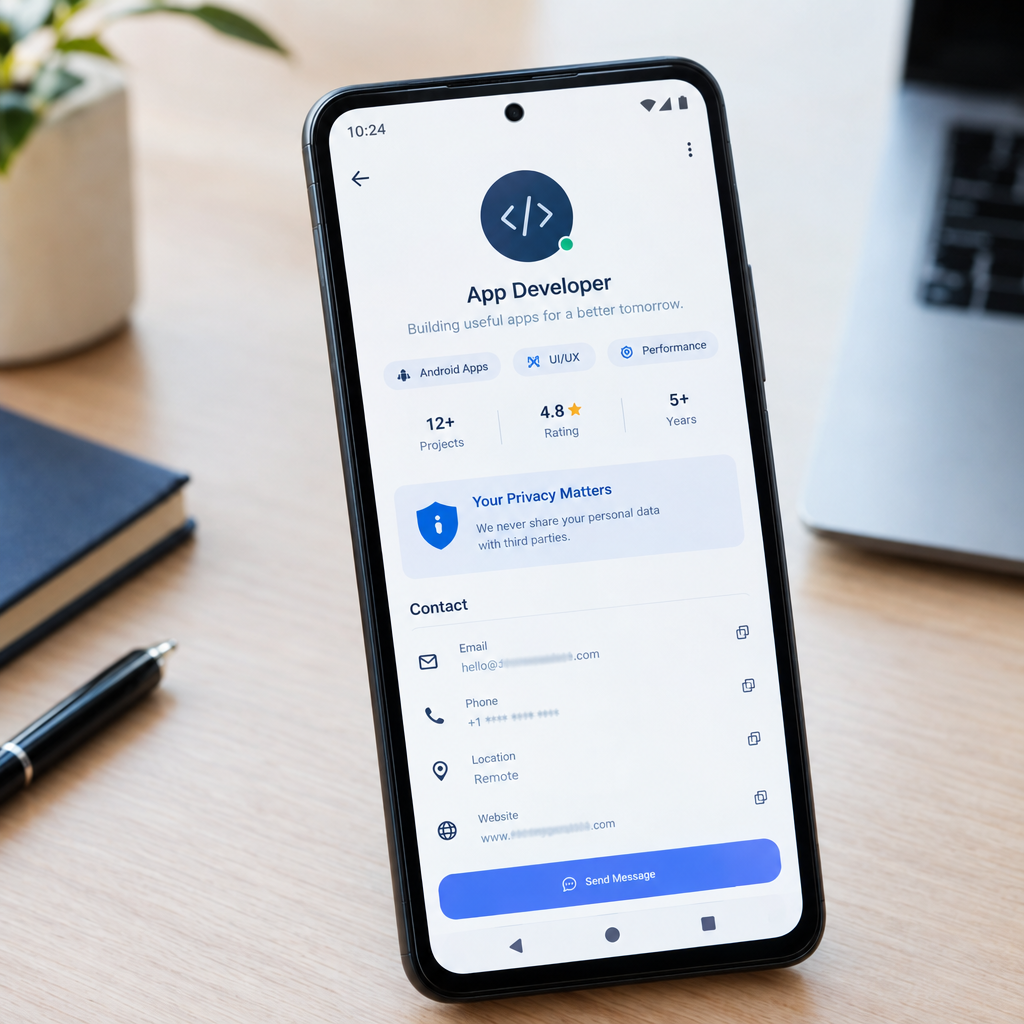
Google’s plans to make Android developers’ identifying information public have raised an important question for businesses: how can app users know who they are dealing with without exposing developers to unnecessary privacy and security risks? The issue is especially relevant to European companies, as digital services face growing expectations around transparency and accountability.
For a business that publishes an Android app, this is more than a platform update. It can affect which contact details you use, how you manage your developer account, and how ready your organisation is to handle public enquiries. At Best Choice, we help businesses build and maintain digital services with these practical considerations in mind.
1. Why Google is asking for developer information
Google says its developer verification requirements are connected to efforts to make app publishers identifiable and accountable. European rules, including the Digital Services Act, place transparency obligations on certain online services and traders. Google’s approach may result in developer details being visible to the public, potentially beyond the European market.
The exact information displayed can depend on the type of developer account and Google’s current policies. Businesses should check the latest official guidance rather than assume that every account is treated the same way. This is also separate from the personal data an app may collect from its users.
2. Why public addresses are causing concern
For a large company, publishing a registered business address may be manageable. For a solo developer or a small business using a home address, public visibility can create real concerns about personal privacy, unwanted contact, and security. Those concerns help explain why Google’s decision has attracted criticism.
There is also a practical business impact. Customers may use public developer details to ask support questions or report problems, while scammers may use them for impersonation or targeted messages. A clear plan for handling enquiries can help ensure that transparency does not turn into a daily distraction.
3. What Android app publishers should do now
Start by checking your Google Play developer account and the latest requirements that apply to your account type. Confirm which details are required, which may appear publicly, and whether you have time to update them before a relevant deadline. If you are unsure about legal obligations, speak with a qualified adviser familiar with your business and the applicable rules.
- Review your contact details: Identify whether an address or phone number is personal or business-only.
- Use appropriate business channels: Where permitted, consider a registered business address and a dedicated support email.
- Check account security: Use strong authentication and limit developer-console access to authorised staff.
- Document your process: Decide who will respond to public enquiries and how quickly.
Do not enter misleading information to avoid public disclosure. Instead, confirm what options are allowed and make sure account details match your business records.
4. Build privacy and support into your app operation
Public developer details are only one part of an app’s privacy and security picture. Businesses should also review their app’s permissions, data collection, privacy notices, and support process. A clinic, for example, may need a clear distinction between general app support and sensitive patient communication. A webshop may need a reliable route for questions about orders without directing customers to an individual developer’s personal inbox.
We at Best Choice can help businesses create custom app and backend workflows that route enquiries to the right team, record cases, and automate routine responses. This can reduce manual work while keeping customer communication organised and access to internal systems controlled.
5. Choose an app distribution strategy that fits your business
Google Play is an important distribution channel, but it is not the only way to deliver an Android app. Some organisations use private distribution for internal apps, while open-source projects may also consider platforms such as F-Droid. Each option has different reach, maintenance needs, and user expectations, so changing channels is not a simple substitute for reviewing Google’s requirements.
For many businesses, the best approach is to keep using the channels that reach their customers while improving the surrounding systems. We can build custom apps, connect them to existing APIs and databases, and help manage releases and support. Where relevant, we can also integrate third-party services or improve an existing app setup.
6. Treat policy changes as part of digital risk management
Platform rules change, and app publishers benefit from reviewing them regularly rather than reacting at the last minute. Add developer-account checks to your wider IT and compliance routine, alongside software updates, access reviews, backups, and privacy assessments. This is particularly useful for businesses that rely on an app for bookings, sales, or daily operations.
A café using an app for table bookings, for instance, needs both a dependable booking flow and a clear way to handle customer questions. A warehouse app may be less public-facing, but still needs controlled access and a reliable update process. In both cases, planning ahead helps protect business continuity and save staff time.
Conclusion
Google’s developer-information requirements highlight the balance between transparency and privacy. Android app publishers should verify what applies to their account, avoid using personal contact details where appropriate alternatives are allowed, and prepare a sensible process for public enquiries. Because policies can change, check Google’s current guidance and seek legal advice for questions about your obligations.
If you are developing an Android app or want to improve its security, integrations, support workflows, or backend automation, contact Best Choice. We can help you build a practical solution that supports your business and the people who use your app.